
Channa
Full Member
- Posts
- 0
- Likes
- 3
I fulltimed from March 2008 up until July 2012, Most of the time I spent in France, with brief spells in the UK
mainly Yorkshire.
The first conundrum is what is the right van ? layout etc, and it almost a dead certainty after you have spent
considerable time in the van there are things you would change and a new "wish list" presents itself.
I looked at several vans , some of which were in dire condition, I ended up spending more than I wanted and landed
upon A CI Euro 100 Riviera,4 Berth coachbuilt 5.5M in length from a friend who runs a dealership in Doncaster.
The van was pretty standard, 85 ah battery, shower room, thetford toilet 3 way fridge and 4 burner hob on standard
calor 13 kg bottle. The only reservation was no oven ( more about that later.)
I had sold my house, and was camping in a tent, possesions in storage and all I needed crammed into the back of A
Land Rover and trailer.
You can imagine when I laid my hands on the van, I was in heaven.Then the adventure could begin.
So my observations on the challenges and rewards.
Space
to maximise, I use the overhead bed, and use the dining area for dining reading etc, the van has a wardrobe and
storage lockers and thats the first problem, I needed winter clothes, Summer clothes Waterproofs vans seem designed
for a couple of weeks away at a time not a permenant residence.Cooking utensils,tool kits including brazing torches
etc it was important I could get my self out of a fix should it happen albeit that can be easier said than done.
It was always at the back of my mind breakdowns accidents,where would I go?I had a German Shepheard dog with me too
so options of alternative accomodation were limited
Residence.
I was lucky in that I could use a parental address for mail etc,If this wasnt the case where do you register your
bank accounts? what address do you use for Insurance? driving licence in effect you become of no fixed abode.
Insurance
I insured with Safeguard orgiginally then changed to Nfu,they are a couple of companies that allow 365 days
european travel.Thereason for changing and worth noting,Safeguard insure social domestic and pleasure NOT commuting
to and from a place of work. Ironically I was based on a campsite where I worked and though the van didnt turn a
wheel this is classed as commuting.
My last trip to France was 18 months and my MOT lapsed,A quick call to NFU and they where happy to extend cover on
the basis I would return to the UK.
I should in theory have re registered the van in France but lack of permenant address killed that idea whilst it
lasted.
Another thing to remember is you cant sorn the vehicle if you are abroad because it is being used therefore you
need to ensure you are taxed.
On return to the UK, An email to my testing station,pre arranged appointment allowed me to drive from Hull to
Doncaster legally.
It may be of interest to those who have older vans where UK insurers place restrictions, AXA have an English
speaking team in Nice who will insure A UK vehicle with french insurance ...Just be sat down when they quote
though.
GAS
Gas in France is easy to acquire, and yet it seems to worry a lot of people.Calor is non existent, I visited a
bricolage similar to B and Q ( in fact one group are owned by b and q)Bought a Antargaz calypso cylinder and
regulator the cost I think was 30 euros and refills were 17 euros. worth bearing in mind if you dont have a gaslow
system or similar.
Getting old of refills is easy, most fuel stations stock bottled gas, the Bricos too btw want an address, local
campsite will do.
My trips into Italy and Spain were short so I just ensured I have enough French gas.
Back in the Uk I am back on Calor got shut of the 13 kg and now run a 19 kg propane all year. Butane has difficulty
gassing in cold weather, Propane doesnt.And IMO there is no discernible difference in performance of appliances.
I have run out of gas Sunday morning, my back up is a petrol fired Coleman stove with two burners, great to cook on
outside anyway.....It aint a BBQ and campsites that ban BBQs often turn a blind eye.
Electricity
I started off with an 85ah battery changed it to an Elecsol 110 ah which cost 110 pounds when the old one gave up (
losing charge very quickly) The more amp hours you have the longer you can wild in areas of short distance between
location. I have never bothered with solar panels or a generator,and in all honesty never really had a problem.(
Then again I wasnt using a TV Sat system etc, SO my draw was always minimal)
Many aires and campites of course offer EHU amperage varies between 5 and 16 amps, some have the modern "blue "
european plugs some the older continental and French style sockets.
Reverse polarity is a common occurence in France, which whilst not inherantly dangerous is not ideal. A simple
solution is to make up two fly leads,clearly marking one of them and reversing the wiring so the Electricty when
reaching the van is correct polarity for English sockets in side.To check polarity a cheap "socket and see" tester
does the trick. I spent a lot of time working on sites so it was worth my trouble to know things were right.
Water.
All campsites in France have to legally provide "eau potable"" which is drinking water, campsites of course are
just one source. A lot of "aires" allow you to obtain water some charge a couple of Euros some dont. Water is
easily obtainable so it is worth carrying only half a tank or so to save weight and improve economy.
Garages churchyards in the UK are obvious sources are public toilets.
Its well worthwhile carrying a couple of adaptors if filling by hose in France particularly a lot of the taps have
a screw fitting as opposed to our sleeve and jubilee clip arrangement.
Aires
French use the word aire for area which has many connotations,specific areas are set aside for the use of Camping
cars. most have a borne where you can get water, a bit of electric and dump grey and toilet waste.
to dump grey and toilet waste is generally free, Water inland is generally free perhaps 3 euros on the coastal
touristy type aires.
There are aires where electric is free, yes you read right, the most spectacular possibly St Pierre St Martin ski
resort in the Pyrennees.
Particularly in tourist areas, eg St Tropez Expect to pay 12 euros a night but for this you have electric, Water
and a shower block with toilet.Far cheaper than a campsite when in high season expect to pay 45 euros a night.
True Wilding, is easy enough although again the Cote d'azur, the tourist honeypots can be a challenge,but deffo not
impossible.
High season popular spots, try and get settled no later than mid afternoon before it fills, At Oradour Sur Glane,
People parked two abreast in one parking spot it was that busy.
In the Carmargue high season I left one aire neighbour parked that close, I couldnt open the habitation door.
Aire de Gens voyage, are aires set aside for travellers, I stopped on a couple, and other than my peg whittling not
up to scratch, no problems whatsoever, expect a friendly curiosity.
Laundry.
in my opinion the biggest problem wilding, Storing smelly socks aside, sat 2 hours watching a washing machine is
not my idea of fun.
Of course if you are prepared to pay there are service washes, My solution was a nappy bucket in the shower filled
with hot water and soap powder ...I then drove to next venue, the vibration from the road and van doing the hard
work, rinse and dry on arrival, although washing day one was mindful that hanging washing from the van may make you
unpopular, Bumpers bonnets and bike racks make discreet washing lines.
I kid not I found of all the challenges laundry the most tiresome.
cleanliness
keeping a van tidy when permanently occupied is another challenge, the only thing I would say, is a laminate lino
is preferable to a carpet, a sweep, wipe with the linguettes and everything looks good again and smells nice.
A litre of cheap coke down plug holes, stops the nasty niffs also useful in the toilet.
Work
lack of address I have found in the Uk treats me with suspicion, In the Uk I have worked with travelling fairs,
Agency driven, and ran pubs.( and bugged Rubbertramp a couple of weeks decorating in Inverness)
France is a touch more difficult, There are three obvious routes to go, Employed, Marche noir ( black market ) or
Employed by a Uk Employer.
Marche Noir can be picking apples, in my case cutting grapes for Monbazilliac wine in the Dordogne,Cheffing in the
Ardeche Its ok for a few quid but doesnt get you in the system.
Working for a French employer is difficult in my opinion, firstly if you dont speak French forget it.The difficulty
is simple to work you need a social security number like our NI number.....Your employer first time around acquires
it for you, of course a French person he doesnt have the hassle so you are on the backfoot straightaway.Again lack
of address etc complicates further.
I worked for Holidaybreak PLc better known as Keycamp and Eurocamp, pitch, electric, gas .....A uk company I paid
UK taxes national insurance so protected my pension I suppose.
I eventually became part of the maintenance team, and the company paid for my LPG gas qualification so overall a
useful excercise.
The drawback of course being that the work tends to be seasonal.
Thanks for reading, and those wanting to fulltime I hope I have give a few pointers from my own experiences
Channa
mainly Yorkshire.
The first conundrum is what is the right van ? layout etc, and it almost a dead certainty after you have spent
considerable time in the van there are things you would change and a new "wish list" presents itself.
I looked at several vans , some of which were in dire condition, I ended up spending more than I wanted and landed
upon A CI Euro 100 Riviera,4 Berth coachbuilt 5.5M in length from a friend who runs a dealership in Doncaster.
The van was pretty standard, 85 ah battery, shower room, thetford toilet 3 way fridge and 4 burner hob on standard
calor 13 kg bottle. The only reservation was no oven ( more about that later.)
I had sold my house, and was camping in a tent, possesions in storage and all I needed crammed into the back of A
Land Rover and trailer.
You can imagine when I laid my hands on the van, I was in heaven.Then the adventure could begin.
So my observations on the challenges and rewards.
Space
to maximise, I use the overhead bed, and use the dining area for dining reading etc, the van has a wardrobe and
storage lockers and thats the first problem, I needed winter clothes, Summer clothes Waterproofs vans seem designed
for a couple of weeks away at a time not a permenant residence.Cooking utensils,tool kits including brazing torches
etc it was important I could get my self out of a fix should it happen albeit that can be easier said than done.
It was always at the back of my mind breakdowns accidents,where would I go?I had a German Shepheard dog with me too
so options of alternative accomodation were limited
Residence.
I was lucky in that I could use a parental address for mail etc,If this wasnt the case where do you register your
bank accounts? what address do you use for Insurance? driving licence in effect you become of no fixed abode.
Insurance
I insured with Safeguard orgiginally then changed to Nfu,they are a couple of companies that allow 365 days
european travel.Thereason for changing and worth noting,Safeguard insure social domestic and pleasure NOT commuting
to and from a place of work. Ironically I was based on a campsite where I worked and though the van didnt turn a
wheel this is classed as commuting.
My last trip to France was 18 months and my MOT lapsed,A quick call to NFU and they where happy to extend cover on
the basis I would return to the UK.
I should in theory have re registered the van in France but lack of permenant address killed that idea whilst it
lasted.
Another thing to remember is you cant sorn the vehicle if you are abroad because it is being used therefore you
need to ensure you are taxed.
On return to the UK, An email to my testing station,pre arranged appointment allowed me to drive from Hull to
Doncaster legally.
It may be of interest to those who have older vans where UK insurers place restrictions, AXA have an English
speaking team in Nice who will insure A UK vehicle with french insurance ...Just be sat down when they quote
though.
GAS
Gas in France is easy to acquire, and yet it seems to worry a lot of people.Calor is non existent, I visited a
bricolage similar to B and Q ( in fact one group are owned by b and q)Bought a Antargaz calypso cylinder and
regulator the cost I think was 30 euros and refills were 17 euros. worth bearing in mind if you dont have a gaslow
system or similar.
Getting old of refills is easy, most fuel stations stock bottled gas, the Bricos too btw want an address, local
campsite will do.
My trips into Italy and Spain were short so I just ensured I have enough French gas.
Back in the Uk I am back on Calor got shut of the 13 kg and now run a 19 kg propane all year. Butane has difficulty
gassing in cold weather, Propane doesnt.And IMO there is no discernible difference in performance of appliances.
I have run out of gas Sunday morning, my back up is a petrol fired Coleman stove with two burners, great to cook on
outside anyway.....It aint a BBQ and campsites that ban BBQs often turn a blind eye.
Electricity
I started off with an 85ah battery changed it to an Elecsol 110 ah which cost 110 pounds when the old one gave up (
losing charge very quickly) The more amp hours you have the longer you can wild in areas of short distance between
location. I have never bothered with solar panels or a generator,and in all honesty never really had a problem.(
Then again I wasnt using a TV Sat system etc, SO my draw was always minimal)
Many aires and campites of course offer EHU amperage varies between 5 and 16 amps, some have the modern "blue "
european plugs some the older continental and French style sockets.
Reverse polarity is a common occurence in France, which whilst not inherantly dangerous is not ideal. A simple
solution is to make up two fly leads,clearly marking one of them and reversing the wiring so the Electricty when
reaching the van is correct polarity for English sockets in side.To check polarity a cheap "socket and see" tester
does the trick. I spent a lot of time working on sites so it was worth my trouble to know things were right.
Water.
All campsites in France have to legally provide "eau potable"" which is drinking water, campsites of course are
just one source. A lot of "aires" allow you to obtain water some charge a couple of Euros some dont. Water is
easily obtainable so it is worth carrying only half a tank or so to save weight and improve economy.
Garages churchyards in the UK are obvious sources are public toilets.
Its well worthwhile carrying a couple of adaptors if filling by hose in France particularly a lot of the taps have
a screw fitting as opposed to our sleeve and jubilee clip arrangement.
Aires
French use the word aire for area which has many connotations,specific areas are set aside for the use of Camping
cars. most have a borne where you can get water, a bit of electric and dump grey and toilet waste.
to dump grey and toilet waste is generally free, Water inland is generally free perhaps 3 euros on the coastal
touristy type aires.
There are aires where electric is free, yes you read right, the most spectacular possibly St Pierre St Martin ski
resort in the Pyrennees.
Particularly in tourist areas, eg St Tropez Expect to pay 12 euros a night but for this you have electric, Water
and a shower block with toilet.Far cheaper than a campsite when in high season expect to pay 45 euros a night.
True Wilding, is easy enough although again the Cote d'azur, the tourist honeypots can be a challenge,but deffo not
impossible.
High season popular spots, try and get settled no later than mid afternoon before it fills, At Oradour Sur Glane,
People parked two abreast in one parking spot it was that busy.
In the Carmargue high season I left one aire neighbour parked that close, I couldnt open the habitation door.
Aire de Gens voyage, are aires set aside for travellers, I stopped on a couple, and other than my peg whittling not
up to scratch, no problems whatsoever, expect a friendly curiosity.
Laundry.
in my opinion the biggest problem wilding, Storing smelly socks aside, sat 2 hours watching a washing machine is
not my idea of fun.
Of course if you are prepared to pay there are service washes, My solution was a nappy bucket in the shower filled
with hot water and soap powder ...I then drove to next venue, the vibration from the road and van doing the hard
work, rinse and dry on arrival, although washing day one was mindful that hanging washing from the van may make you
unpopular, Bumpers bonnets and bike racks make discreet washing lines.
I kid not I found of all the challenges laundry the most tiresome.
cleanliness
keeping a van tidy when permanently occupied is another challenge, the only thing I would say, is a laminate lino
is preferable to a carpet, a sweep, wipe with the linguettes and everything looks good again and smells nice.
A litre of cheap coke down plug holes, stops the nasty niffs also useful in the toilet.
Work
lack of address I have found in the Uk treats me with suspicion, In the Uk I have worked with travelling fairs,
Agency driven, and ran pubs.( and bugged Rubbertramp a couple of weeks decorating in Inverness)
France is a touch more difficult, There are three obvious routes to go, Employed, Marche noir ( black market ) or
Employed by a Uk Employer.
Marche Noir can be picking apples, in my case cutting grapes for Monbazilliac wine in the Dordogne,Cheffing in the
Ardeche Its ok for a few quid but doesnt get you in the system.
Working for a French employer is difficult in my opinion, firstly if you dont speak French forget it.The difficulty
is simple to work you need a social security number like our NI number.....Your employer first time around acquires
it for you, of course a French person he doesnt have the hassle so you are on the backfoot straightaway.Again lack
of address etc complicates further.
I worked for Holidaybreak PLc better known as Keycamp and Eurocamp, pitch, electric, gas .....A uk company I paid
UK taxes national insurance so protected my pension I suppose.
I eventually became part of the maintenance team, and the company paid for my LPG gas qualification so overall a
useful excercise.
The drawback of course being that the work tends to be seasonal.
Thanks for reading, and those wanting to fulltime I hope I have give a few pointers from my own experiences
Channa


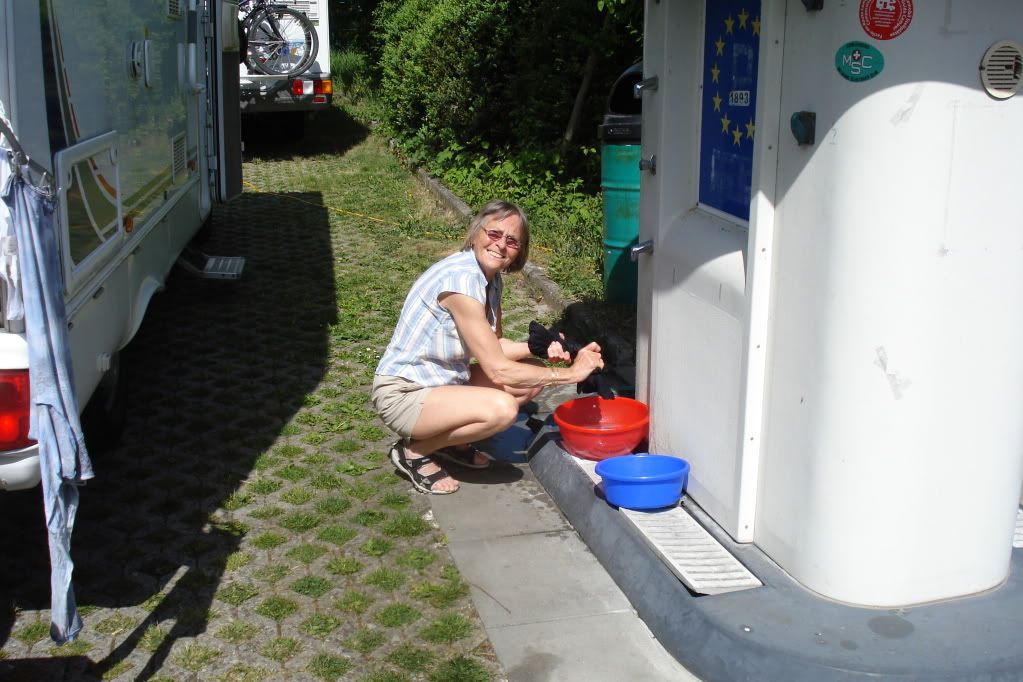
 bit extreme maybe but they can cost less than washing, certainly in terms of time facilities etc.