
Off-Grid Capable Motorhomes: 4x4, Solar & Wild Camping Guide
What Makes a Motorhome Off-Grid Capable?
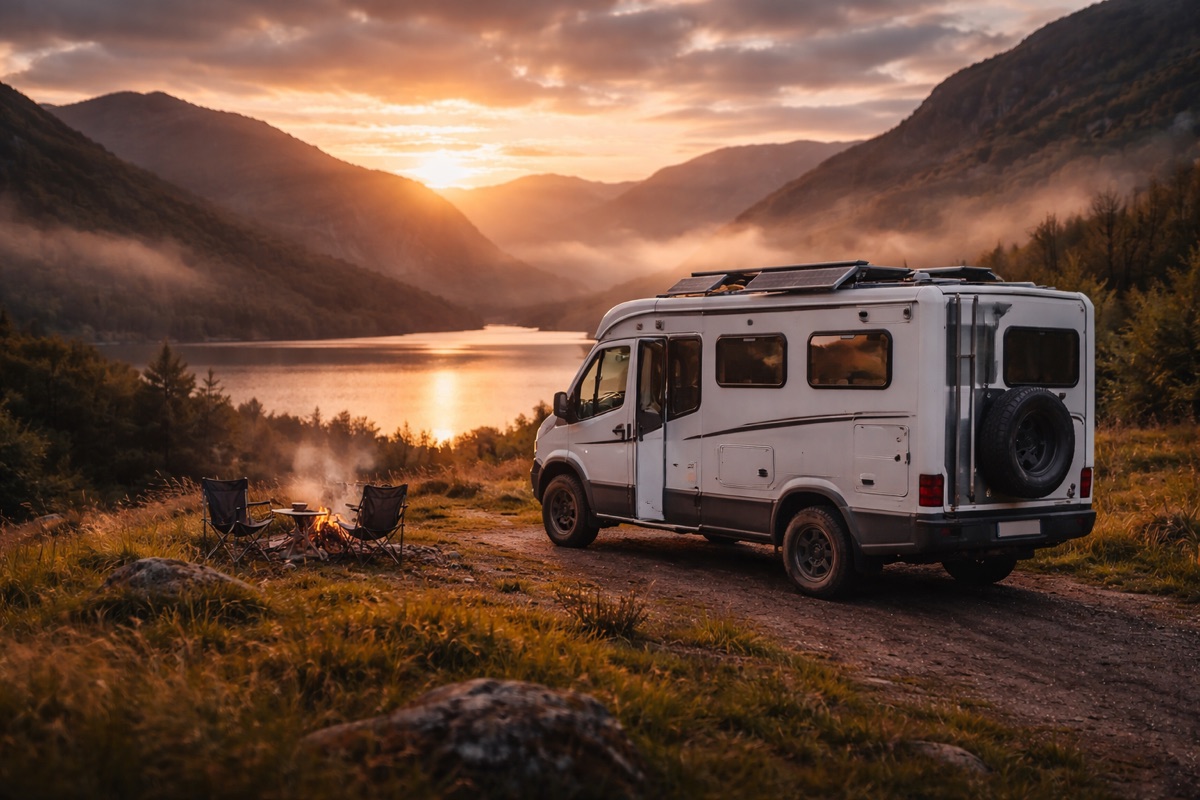
Wild camping in the UK means leaving behind the comforts of mains hook-ups, water taps, and waste disposal. A truly off-grid capable motorhome lets you camp self-sufficiently for days at a time in remote locations — from Scottish Highland glens to Welsh mountain passes and Dartmoor's open moorland.
Off-grid capability comes down to four systems: power generation, water storage, heating independence, and physical access. The best off-grid motorhomes combine generous solar panels, large fresh water tanks, efficient diesel heating, and in some cases, 4x4 drivetrains that reach places ordinary motorhomes simply cannot go.
4x4 Motorhomes: The Ultimate Wild Camping Vehicles
For serious off-grid enthusiasts who want to reach truly remote spots, 4x4 motorhomes represent the pinnacle of wild camping capability. These vehicles can handle unmade tracks, muddy fields, steep gradients, and the sort of terrain that would leave a standard motorhome stuck or damaged.
RP Motorhomes
RP Motorhomes specialise in rugged, off-road capable vehicles built for exactly this purpose. Their range includes models with raised suspension, all-terrain tyres, underbody protection, and genuine four-wheel-drive capability. For UK wild camping enthusiasts who want to explore green lanes, forest tracks, and remote highland locations, RP offers purpose-built solutions.
Their Smart Assist technology adds practical navigation features designed for off-grid adventures, helping you find and reach remote camping spots. If your idea of wild camping involves leaving tarmac behind entirely, RP deserves serious consideration.
Sporttec
Sporttec's STAR 4x4 model brings luxury to the off-road motorhome segment. Built with genuine four-wheel-drive capability, the STAR combines the go-anywhere attitude needed for remote wild camping with premium interior finishes. It's a vehicle that can handle a muddy Highland track on Friday and feel like a luxury hotel on Saturday.
Sporttec's bespoke build approach means each vehicle can be tailored to the owner's specific off-grid requirements — extra solar capacity, upgraded water tanks, or specialist off-road equipment.
Solar Power: Your Off-Grid Energy Source
Solar panels have transformed motorhome wild camping. A well-specified solar system can keep your leisure batteries charged indefinitely during British summer months, powering lights, water pumps, phone chargers, and even laptop computers without any external connection.
How Much Solar Do You Need?
For basic wild camping (LED lights, water pump, phone charging), a single 100W panel with a 100Ah leisure battery provides adequate power. For extended off-grid stays with more electrical demands, look for motorhomes with 200-400W of solar capacity and 200Ah+ battery banks. Lithium batteries, whilst more expensive, offer significantly better performance than traditional lead-acid units — they're lighter, charge faster, and deliver more usable capacity.
Winter Considerations
British winters present a solar challenge. Short days and low sun angles dramatically reduce panel output from November to February. Serious winter wild campers supplement solar with efficient diesel generators, wind turbines, or simply larger battery banks charged during travel days. The key is matching your energy budget to realistic winter solar yields rather than optimistic summer figures.
Water Independence
Fresh water capacity directly determines how long you can camp without facilities. Standard motorhomes carry 80-120 litres, sufficient for 2-3 days with careful use. Off-grid specialists often upgrade to 150-200+ litre tanks, extending self-sufficiency to a week or more.
Water conservation habits matter as much as tank size. Navy showers (wet, soap, rinse), washing up in a bowl rather than under running water, and using campsite taps to top up when passing all extend your range dramatically. Some experienced wild campers carry portable water filters, allowing safe use of streams and rivers to supplement tank supplies — though water quality should always be verified first.
Heating Without Hook-Ups
British wild camping frequently means cold nights, even in summer at altitude or on exposed moorland. Diesel blown-air heating systems (Webasto, Eberspacher, Truma Combi D) run from the vehicle's diesel tank, providing effectively unlimited heating without LPG bottles or mains electricity. This independence is crucial for extended winter wild camping.
LPG heating remains effective for shorter trips, but cylinders eventually run empty. A typical 6kg gas bottle provides 30-40 hours of heating — adequate for a long weekend but limiting for extended stays. Motorhomes with dual-fuel capability (diesel primary, LPG backup) offer the best flexibility.
Choosing Your Off-Grid Motorhome
Your choice depends on how adventurous your wild camping ambitions are:
- Casual wild camping (car parks, quiet laybys, designated areas): Any well-equipped motorhome with decent solar and water capacity suffices. Focus on comfort and self-sufficiency systems rather than off-road capability.
- Moderate off-grid (farm sites, forest clearings, rural tracks): A standard motorhome with upgraded solar (200W+), larger water tanks, and diesel heating handles most UK wild camping scenarios comfortably.
- Serious off-road wild camping (green lanes, Highland tracks, remote moorland): Consider 4x4 models from RP Motorhomes or Sporttec. The investment pays for itself in access to locations other motorhomes simply cannot reach.
Essential Off-Grid Equipment Checklist
- Solar panels (minimum 100W, ideally 200W+) with MPPT charge controller
- Leisure battery bank (200Ah+ lithium or 300Ah+ lead-acid)
- Diesel blown-air heating (Webasto/Eberspacher/Truma)
- Fresh water capacity 100L+ with water level gauge
- 12V compressor fridge (more efficient than 3-way absorption)
- LED lighting throughout (minimal power draw)
- Portable waste water container or large grey tank
- Mobile signal booster for remote areas
- Levelling ramps and chocks
- Basic toolkit and spare fuses
Wild Camping and the Law
Wild camping legality varies across the UK. Scotland's right to roam allows responsible wild camping almost everywhere. In England and Wales, wild camping is technically trespass on private land without permission, though many areas tolerate responsible overnight stays — particularly Dartmoor's designated areas. Always follow the Scottish Outdoor Access Code principles: leave no trace, camp away from buildings, and move on promptly.
Wherever you camp, an off-grid capable motorhome lets you be a better wild camper. Complete self-sufficiency means no waste, no noise from generators, and no impact on the environment. That's what responsible wild camping looks like.
Looking for your next motorhome? Browse our showroom of quality used motorhomes from trusted UK dealers.