
American vs European Motorhomes: UK Buyer's Guide
The Fundamental Differences
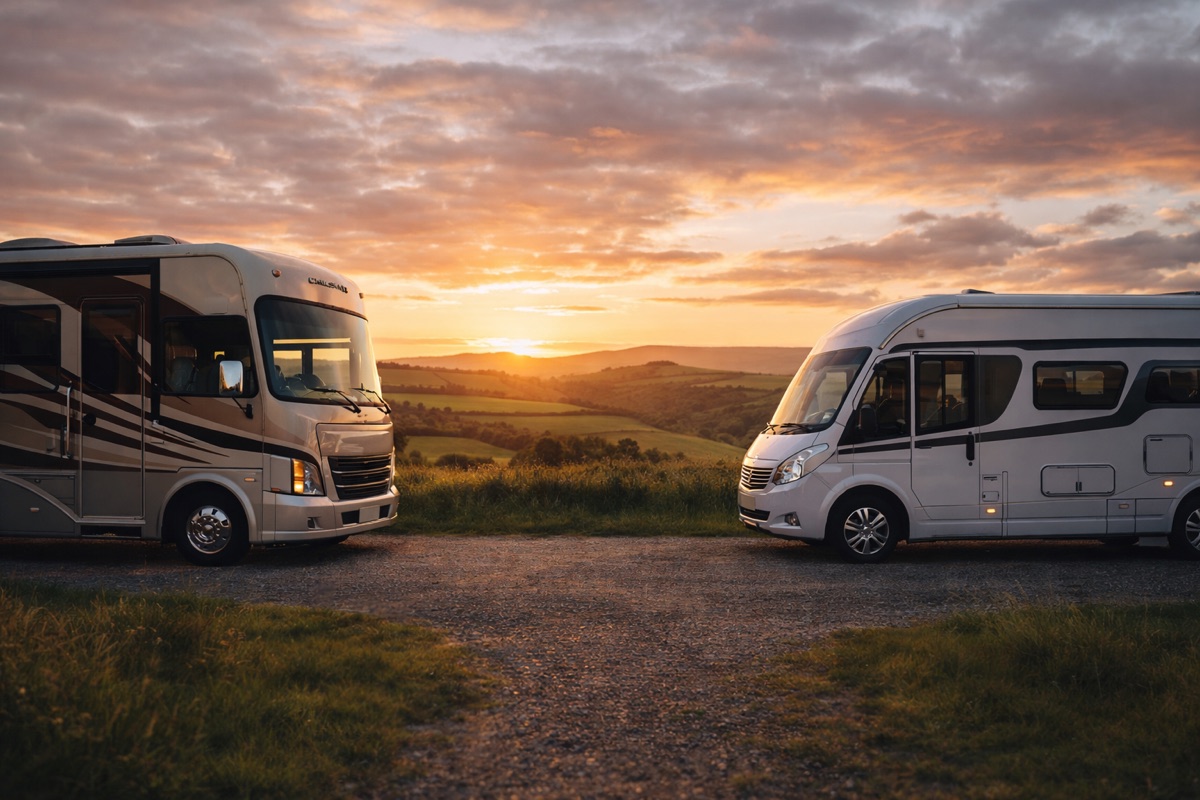
When you spot an American RV on British roads, it's impossible to miss. These behemoths represent a completely different philosophy to European motorhome design, and understanding these differences is crucial before you even consider which might suit you.
American RVs are built for the wide-open spaces of North America. We're talking vehicles that regularly exceed 8 metres in length and 2.5 metres in width, often built on hefty truck chassis with petrol V8 or V10 engines. European motorhomes, by contrast, are designed for narrower medieval town centres, tighter campsites, and expensive diesel. The typical European motorhome sits on a Fiat Ducato, Peugeot Boxer, or similar van chassis, measuring 6-7.5 metres long and around 2.3 metres wide.
The construction methods differ dramatically too. American RVs typically use timber-framed walls with aluminium cladding, creating spacious interiors with residential-style features like full-size American fridges, proper ovens, and slide-out sections that expand the living space when parked. European manufacturers favour lighter composite panel construction with more compact, purpose-built appliances designed specifically for mobile living.
The American Brands You'll Encounter
Whilst rare, certain American brands do make it to UK shores. Winnebago is perhaps the most recognised name, having produced RVs since 1958 and practically inventing the modern motorhome. Their products range from compact Class B campervans to enormous Class A coaches.
Thor Motor Coach produces mid-range to luxury RVs and has a significant presence in the American market. Tiffin Motorhomes occupies the luxury end, known for exceptional build quality and attention to detail. Forest River, founded in 1996, has become one of America's largest RV manufacturers, whilst Coachmen has been producing recreational vehicles since 1964, offering everything from entry-level to premium models.
If you're browsing the used market, you might also encounter Fleetwood models from before the company's troubles in the 2000s. These American giants occasionally appear for sale in the UK, imported by adventurous owners who later discovered the reality of British ownership.
European Dominance in the UK Market
The UK motorhome market is overwhelmingly European, and with good reason. German manufacturers like Hymer, Dethleffs, Bürstner, and Knaus have earned stellar reputations for quality engineering and practical design. These brands understand European roads, regulations, and usage patterns.
British manufacturers punch well above their weight. Swift, Bailey, Auto-Trail, Elddis, and Auto-Sleepers have been building motorhomes specifically for UK buyers for decades. They understand our needs: compact dimensions for country lanes, right-hand drive options, and layouts that make sense for British touring habits.
French brands like Rapido, Pilote, Chausson, and Trigano offer excellent value, often providing generous specifications at competitive prices. Italian manufacturers such as Laika, Mobilvetta, and Roller Team bring stylish design and clever use of space to the market.
The Spanish brand Benimar has grown rapidly in popularity, offering well-specified motorhomes at attractive price points. What unites all these European manufacturers is their understanding that a motorhome must navigate Alpine passes, fit on Mediterranean campsites, and survive potholed British roads whilst returning reasonable fuel economy.
The Practical Challenges of American RV Ownership in the UK
Let's be brutally honest: owning an American RV in Britain presents significant challenges. Width is the first hurdle. At 2.5+ metres wide (some exceed 2.6m), you'll struggle with narrow lanes, car park barriers, and even some motorhome-friendly sites. Many UK campsites have pitch widths designed for European vans, and you'll find yourself limited to sites with specific large vehicle pitches.
Left-hand drive presents constant challenges on British roads. Overtaking becomes nerve-wracking, navigating roundabouts requires passenger assistance, and drive-through facilities are positioned for right-hand drive vehicles. Some owners adapt, but it never becomes truly comfortable.
Fuel consumption is eye-watering. American RVs typically run large petrol engines that return 12-15 mpg if you're lucky, compared to 25-30 mpg from a European diesel motorhome. With UK fuel prices, this difference costs thousands annually.
Finding parts can prove challenging. Whilst some components are universal, many fixtures, appliances, and chassis parts must be imported from America. Service centres experienced with American RVs are few and far between, and many British motorhome technicians lack familiarity with American systems.
Insurance and MOT Considerations
Insuring an American RV in the UK requires specialist brokers. Standard motorhome insurance often won't cover imported American vehicles, and when you do find cover, premiums typically run 50-100% higher than equivalent European motorhomes. Insurers worry about parts availability, repair costs, and the vehicle's unsuitability for British roads.
MOT testing presents its own complications. Whilst the test itself follows standard procedures, many testing stations lack the equipment for very large vehicles. You'll need to find an HGV testing centre, which means booking well in advance and potentially travelling considerable distances. Testers unfamiliar with American RV quirks may fail items that are perfectly legal but look unusual to British eyes.
SVA (Single Vehicle Approval) may be required if importing a vehicle that wasn't originally sold in Europe. This process ensures the vehicle meets British construction and use regulations, and it's not cheap or quick. Many imported American RVs already in the UK went through this process years ago, but verify the documentation carefully before purchasing.
Price Comparison: Value for Money?
Here's where American RVs become tempting. A used American RV offers incredible space and luxury for relatively little money. You might find a 30-foot Thor Motor Coach with slide-outs, residential appliances, and luxury furnishings for £30,000-£40,000. A European motorhome offering half the interior space and more basic specifications might cost the same or more.
However, this apparent value evaporates when you consider running costs. That £35,000 American RV might cost £8,000 annually in fuel for 10,000 miles, compared to £4,000 for a European diesel. Add higher insurance, parts costs, and potential shipping charges for components, and the five-year total cost of ownership becomes significantly higher.
European motorhomes hold their value better in the UK market. When selling time comes, your Hymer, Swift, or Rapido will find buyers quickly. That American RV might sit on the market for months, limiting your pool of potential buyers to fellow enthusiasts who accept the compromises.
What You Actually Get
American RVs excel at providing residential-style living. Full-size cookers with proper ovens, large American-style fridges, spacious bathrooms with separate showers, and genuinely comfortable seating areas. Many feature multiple slide-outs that transform the interior space when parked. Build quality varies enormously between manufacturers, but premium brands like Tiffin offer genuinely luxurious interiors.
European motorhomes prioritise efficiency and practicality. You'll get lighter construction for better fuel economy, compact appliances designed for mobile use, and dimensions that make everyday driving manageable. The best European manufacturers like Hymer or Carthago deliver exceptional quality, whilst even budget brands like Bailey or Elddis provide reliable, practical touring vehicles.
Who Should Consider an American RV?
American RVs suit a specific type of buyer. If you're planning to use your motorhome primarily on a permanent pitch or semi-permanent seasonal site, the driving challenges matter less. Some buyers position their American RV at a favourite campsite for the season, using it as a holiday home rather than a touring vehicle.
If you have mobility issues or require genuinely spacious accommodation, American RVs offer unmatched interior volume. The wider body and clever slide-out technology create interiors that feel like proper homes. For full-timers spending months aboard, this space becomes valuable.
Those with previous American RV experience, perhaps from working or living in the USA, may prefer the familiar layout and feel. Some buyers simply love the American aesthetic and accept the compromises as worthwhile for the style and space they prefer.
Who's Better Off With European?
Honestly, most UK buyers suit European motorhomes better. If you plan active touring, visiting different sites regularly, and exploring Britain's towns and countryside, a European motorhome's dimensions and right-hand drive make life immeasurably easier.
Anyone concerned about running costs should choose European. The fuel savings alone justify the decision, and parts availability, insurance costs, and resale values all favour European models.
First-time motorhome buyers should definitely start with European designs. Learn the ropes with a manageable vehicle before even considering whether an American RV might suit you. The Fiat Ducato-based motorhome has become the default choice for excellent reasons: it works brilliantly for European touring.
Buying a Used American RV in the UK
If you've decided an American RV suits your needs, buying used in the UK makes more sense than importing. The previous owner has already navigated the import process, SVA approval, and initial challenges. Verify all documentation carefully: ensure the vehicle has proper MOT history, valid insurance, and crucially, that it's fully legal for UK roads.
Inspect thoroughly for water damage, the nemesis of American RVs with their timber-framed construction. Check around slide-outs particularly carefully, as seals deteriorate and British weather differs dramatically from American climates. Look for soft spots in floors, walls, and ceilings indicating water penetration.
Join American RV owners' clubs and forums before buying. These communities provide invaluable support, parts sourcing advice, and realistic expectations. They'll also direct you to specialists who understand these vehicles, essential when you need servicing or repairs.
Test drive extensively. An American RV drives nothing like a car or even a European motorhome. Ensure you're comfortable with the width, length, and left-hand drive before committing. Try reversing, tight manoeuvres, and motorway driving. If you're not confident, walk away.
Budget realistically for running costs. Calculate fuel consumption based on honest figures (12-15 mpg), factor in higher insurance, and keep a maintenance fund for expensive parts that might need importing. Many American RV owners love their vehicles but admit they're not for everyone.
The Verdict
American RVs represent a particular dream: spacious, luxurious, residential-style living on wheels. For the right buyer in the right circumstances, they deliver that dream beautifully. However, for most UK buyers, European motorhomes simply make more sense.
The British and European manufacturers represented on wildcamping.co.uk have spent decades refining motorhomes for our roads, weather, and touring habits. Brands like Auto-Trail, Swift, Hymer, and Rapido didn't dominate the UK market by accident. They did it by building vehicles that work brilliantly for British owners.
Visit dealerships, attend motorhome shows, and tour both American and European models. The right choice becomes obvious once you've experienced both types. For a few buyers, that American RV will call to you despite the challenges. For most, you'll recognise that European practicality wins every time.
Looking for your next motorhome? Browse our showroom of quality used motorhomes from trusted UK dealers.